

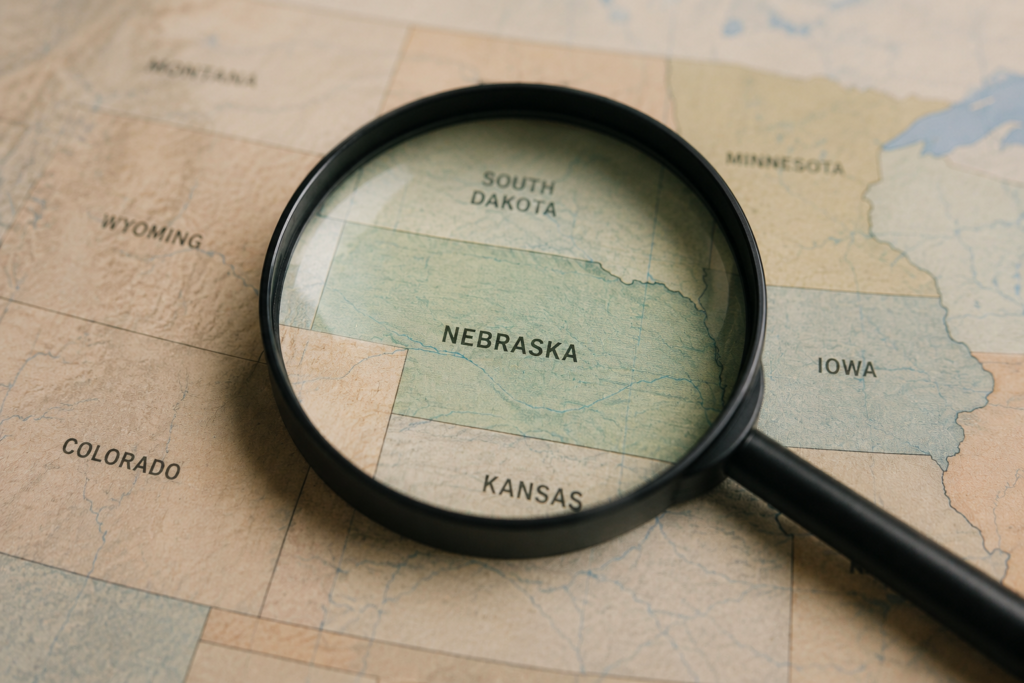
Iowa: 3.8% flat tax. South Dakota: 0%. Nebraska: at 4.55% (for the top tier), dropping to 3.99% by 2027. We’re losing the tax competition, and our best talent with it.
If you’re a successful business owner in Council Bluffs, Iowa, you pay a flat 3.8% state income tax. If you’re across the river in Omaha, you’re paying 5.84%, and won’t see 3.99% until 2027. If you’re in Sioux Falls? Zero. Nothing. Not a dime in state income tax.
Now ask yourself: if you were a tech company founder choosing between Omaha and Sioux Falls, where would you incorporate? If you were a high-earning surgeon choosing between Council Bluffs and Millard, where would you buy your house? Will the hundreds of higher-paying employees relocating to Omaha as part of Union Pacific’s headquarters growth (and decision to retain Omaha as its HQ largely due to the passage of LB1165, the “Grow the Good Life Act”) lay down roots in Omaha or the east side of the river? I sincerely hope someone at UP captures that data after the relocations are complete because it will provide salient insight into the choice that residents currently living in Omaha and those relocating here are forced to make. This will be a business case for these employees: affordability will be the number one requirement for many, and Omaha could lose.
This isn’t hypothetical. Nebraska has been losing high-income residents to neighboring states for years. According to IRS migration data, Nebraska experienced a net outflow of adjusted gross income to low-tax states in every year from 2019 to 2023. We’re literally exporting our tax base.
Governor Pillen and the legislature deserve credit for passing LB 754, which reduces the top rate to 3.99% by 2027. That’s real progress. But ‘by 2027’ isn’t fast enough when Iowa is already at 3.8% TODAY and South Dakota has been at zero forever.
My plan: pair the income tax reduction with a broader competitiveness package that includes R&D tax credits for Nebraska-based companies, student loan repayment incentives for graduates who stay in-state, and a complete elimination of state income tax on military retirement pay – which would make Nebraska the #1 destination for retiring service members.
The math works. For every high-income family that stays in Nebraska instead of leaving for South Dakota, we retain approximately $15,000 to $50,000 in annual state tax revenue from their economic activity, property taxes, and sales taxes, even at a lower income tax rate. Retaining talent is cheaper than replacing it.
John Fredrickson hasn’t championed income tax reduction. His priorities have been on expanding government programs, which require MORE revenue, not less. That’s a fundamental philosophical difference between us, and District 20 voters should know where each candidate stands. And as I have mentioned in other posts/forums, the voters should be aware of, and disappointed in, his proven record of “Present Not Voting” to keep his record ‘clean’ for future political campaigns.
I don’t know about you, but in any of my meetings at my company (and of course, in the military over my 31-year career), saying “I’m here for the meeting(s), but I am not going to give any opinion or “vote” on any decisions, etc. is simply a non-starter. District 20, and Nebraskans in general, deserve representation that will make the hard decisions and place constituents over political ambition. While my opponent is being groomed to run for Congress, I simply want to serve my district and make Nebraska the best possible place to live, work, own a business, and raise a family.